Why Harley Street Leads in Modern Hair Restoration
Harley Street has long been synonymous with elite medical care, and that reputation extends to advanced hair transplant surgery. Concentrated expertise, rigorous clinical standards, and access to cutting-edge technology place this iconic district at the forefront of British hair restoration. Patients seeking hair transplant Harley Street services often look for natural hairline design, long-term planning for progressive loss, and meticulous surgical detail that preserves the donor area for future needs. Clinics here routinely combine artistry with science—mapping facial proportions, caliber, curl pattern, and light-reflection to create density that looks effortless in all lighting.
The technical landscape evolves quickly, yet the core principles remain constant: precise diagnosis, correct candidacy, and technique mastery. Follicular Unit Extraction (FUE) dominates because it allows individual graft harvesting with minimal linear scarring, while Follicular Unit Transplantation (FUT) remains valuable for maximizing graft yield in the right candidate. Some teams deploy direct implantation methods, refined punch systems, or robotics to improve accuracy and graft survival. Regardless of the method, successful outcomes hinge on careful graft handling, low transection rates, and strategic placement angles that mimic native growth patterns.
Top Harley Street surgeons excel at planning for the future. They’ll calibrate frontal density without overcommitting grafts where loss is likely to progress, and they’ll manage the donor zone with conservation in mind. Adjunct therapies such as platelet-rich plasma, low-level light therapy, and medical management (finasteride, dutasteride, topical minoxidil) support graft retention and native hair stability. Patients also benefit from comprehensive aftercare protocols designed to reduce swelling, prevent infection, minimize shock loss, and enhance healing. The result is not only a fuller hairline but also a strategy that respects the patient’s long-term hair characteristics and goals.
Quality on Harley Street also reflects strong clinical governance. Many clinics participate in audits, follow evidence-based guidelines, and maintain transparency around outcomes and photography. That stewardship, combined with patient education and expectation setting, underpins a standard that has helped position London prominently on the global stage for the best hair transplant London experience.
Choosing the Best Hair Transplant in London: Techniques, Candidacy, and What Results Really Look Like
Selecting the best hair transplant London option starts with a candid assessment. Not everyone is a suitable candidate, and not every area should be transplanted immediately. Surgeons evaluate the pattern and velocity of loss, donor density and laxity, hair shaft diameter, curl, and color contrast against the scalp. These factors determine how many grafts are wise to use now and what to reserve for future sessions. A well-planned hair transplant respects the finite nature of the donor supply and designs a hairline that will age gracefully, avoiding overly aggressive low placements that can appear incongruent later.
Technique matters, but technique alone is not the full story. FUE can be executed with manual, motorized, or robotic tools; FUT can offer impressive graft numbers in a single session where the anatomy supports it. Direct implantation approaches may streamline graft handling and reduce out-of-body time. Yet artistry—especially at the hairline—remains the differentiator. Natural micro-irregularities, nuanced angle changes, and variations in density across the frontal third are key to realism. Good clinics detail a timeline: early shedding is common; signs of growth emerge around months 3–4; substantial improvement appears by months 6–9; maturation and texture refinement continue to month 12 and beyond.
Medical therapy complements surgery. Finasteride or dutasteride may stabilize mid-scalp and crown loss, while topical or oral minoxidil can bolster density and improve hair caliber. Lifestyle choices—such as sleep, nutrition, and avoidance of smoking—contribute to recovery quality. Post-op instructions typically include saline sprays, careful washing techniques, and staged return to exercise. Scalp microneedling, when recommended appropriately, can support native hair, while scalp micropigmentation may provide visual density in strategic areas.
Patients often compare pricing across London and the wider hair transplant UK market. Value is measured by more than cost per graft. Consider surgeon involvement, team experience, ethical graft counts, transparency in photography, and robust follow-up. For those exploring options in the capital, hair transplant london resources can help contextualize techniques, candidacy thresholds, and realistic outcomes without the pressure of one-size-fits-all recommendations.
Real-World Outcomes Across the UK: Case Studies, Lessons Learned, and What Sets Top Clinics Apart
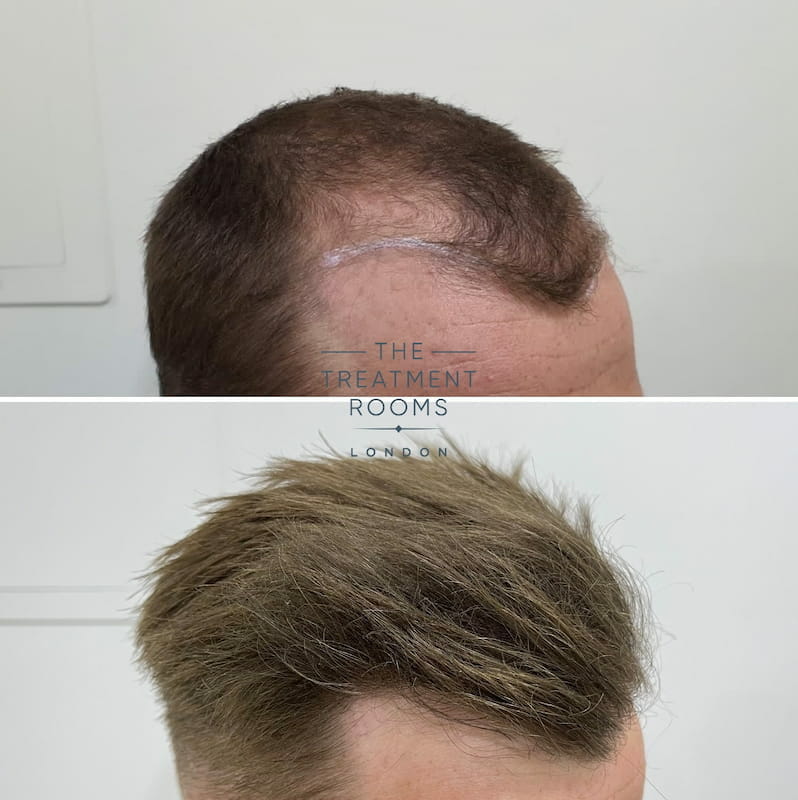
Outcomes speak louder than any brochure. Consider a 32-year-old male with Norwood 3 recession seeking to restore temple symmetry. With dense donor supply and moderate hair shaft diameter, FUE was chosen to place roughly 1,600 grafts primarily in the frontal third. The hairline design integrated micro-irregularities and a feathered transition to avoid a “wall” effect. Months 4–6 showed emerging density and reshaped framing; by month 12, the patient reported improved styling flexibility with natural coverage under strong overhead lighting. This illustrates that a modest graft count, used strategically, can produce a dramatic cosmetic change when framed correctly.
Another example involves a 45-year-old with Norwood 5 pattern requesting both frontal restoration and crown work. The surgeon staged the plan. Session one prioritized the frontal third (around 2,400 grafts) to anchor facial aesthetics; session two, months later, addressed the crown with conservative density to manage graft economy. Medical therapy stabilized mid-scalp thinning. The outcome underscored a key principle: use grafts where they deliver the highest visual impact first, then refine secondary zones. This is a hallmark of thoughtful planning at a hair transplant UK level—optimizing limited resources for durable, natural results.
A third scenario: a patient with visible linear scarring from prior surgery sought repair. Targeted FUE into the scar combined with scalp micropigmentation achieved a blended, low-contrast appearance. On textured and Afro hair types, planning accounted for curl beneath the skin and wider follicles, selecting appropriate punch sizes and angles to minimize transection. For female pattern thinning, the approach emphasized careful part-line density, medical therapy, and, where appropriate, discreet grafting that preserved a naturally soft hairline without overcompaction.
Common pitfalls include overharvesting, which depletes the donor area and limits future options; excessive graft counts sold as a commodity rather than medically justified; and inadequate aftercare that risks infection or poor yield. Another challenge is medical tourism without proper vetting, which can reduce costs but may introduce variable standards and make follow-up difficult. In contrast, established London and Harley Street teams emphasize ethics: aligning surgical scope with long-term prognosis, offering honest expectations, and documenting results with consistent lighting and angles. For those seeking the best hair transplant London solution, these case studies highlight the difference that careful diagnosis, surgical skill, and long-term planning make—turning a procedure into a lasting, confidence-restoring transformation.