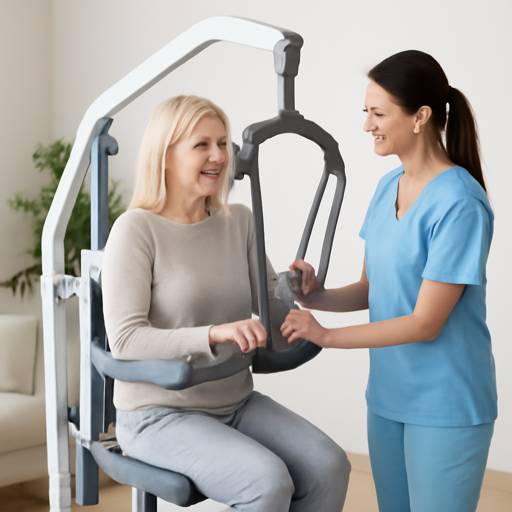
Caregivers and healthcare facilities face a daily challenge: helping patients move from a seated position to standing without risking injury to either party. A sit to stand lift is designed specifically for individuals who can bear some weight on their legs but lack the strength or balance to stand independently. These devices use a sling under the arms or behind the back and a supportive knee pad to guide the patient upward, reducing the physical strain on caregivers by up to 70% compared to manual lifting. The market offers a variety of models, from portable units for home use to heavy-duty frames for clinical settings. When you search for a sit to stand lift for sale, you are not just purchasing equipment—you are investing in dignity, safety, and long-term care efficiency. Understanding the mechanics, weight capacities, and transfer features is critical before making a decision. This article walks you through the key considerations, real-world applications, and advanced options available today.
How a Sit to Stand Lift Works and Why It Matters
A sit to stand lift relies on a simple biomechanical principle: it supports the patient’s torso and knees while a hydraulic or electric actuator gently raises them to a standing position. The patient actively participates by pushing through their feet, which helps maintain muscle tone and circulation. Unlike a full-body sling lift, this device requires the user to have partial weight-bearing ability and good trunk control. The typical components include a wide base for stability, a padded knee brace, and a lift arm that attaches to a sling or vest. Many models offer adjustable leg spread and ergonomic handles to accommodate different body types and chair heights.
The importance of this equipment extends beyond convenience. Studies show that manual patient handling is a leading cause of work-related musculoskeletal disorders among nurses and home health aides. By using a lift, caregivers reduce the risk of back injuries and chronic pain. For patients, the device promotes independence and reduces the fear of falling during transfers. It also facilitates daily activities such as moving from a wheelchair to a toilet, bed, or car. When evaluating a sit to stand lift for sale, you should consider the lifting range—most units handle between 48 and 66 inches in height—and the weight capacity, which commonly ranges from 300 to 600 pounds. Battery-powered models allow for cordless operation, while manual hydraulic units are lower-cost but require more physical effort to pump. Safety features like emergency stop buttons, anti-tip legs, and locking casters are non-negotiable in any clinical environment. A well-chosen lift can serve for years, making it a cost-effective solution for both short-term rehabilitation and long-term care.
Key Features to Look for When Shopping for a Sit to Stand Lift for Sale
Navigating the market requires attention to several critical specifications. The first is transfer height clearance: the lift must fit under standard beds, chairs, and toilet frames. Most sit to stand lifts have a base that slides under furniture, with knee pads that adjust vertically and horizontally. Aluminum frames are lightweight and resistant to corrosion, ideal for home use where portability is needed. Steel frames are more durable for daily institutional use but heavier. Another factor is the sling design. Some lifts come with a one-piece vest that wraps around the chest and back, while others use a split-leg sling that provides additional thigh support. The sling material should be breathable, washable, and have quick-release clips for easy attachment.
Battery life and charging options matter for electric models. A typical rechargeable battery provides enough power for 15 to 30 transfers per charge, and some units offer backup manual operation in case of power failure. Digital displays that show battery level and lift height add convenience. For bariatric patients, look for lifts with reinforced frames and wider bases that distribute weight evenly without tipping. Weight capacity should exceed the patient’s actual weight by at least 20% for safety margin. Also consider the footprint: compact models are easier to maneuver in tight bathrooms or narrow hallways, but larger bases offer greater stability. When you find a sit to stand lift for sale, always verify that it meets ANSI/ISO standards for medical lift devices. Warranty terms—usually 2 to 5 years on the frame and 1 year on electrical components—indicate manufacturer confidence. Finally, assess the ease of cleaning: smooth surfaces, sealed electronics, and removable pads simplify hygiene protocols, crucial in infection-prone settings.
Real-World Applications and Case Studies in Sit to Stand Lift Use
To illustrate the impact of these devices, consider three scenarios. In a rehabilitation hospital, a 72-year-old patient recovering from hip replacement surgery used a sit to stand lift for early mobilization. The physical therapist reported that the lift allowed the patient to start standing within 24 hours post-op, reducing the risk of blood clots and muscle atrophy. The sling design minimized hip flexion beyond safe limits, which is critical after surgery. The patient’s confidence improved, and they progressed to walking with a walker five days earlier than the average recovery timeline for their condition.
In a home care setting, a family caregiver of a 58-year-old multiple sclerosis patient struggled with manual transfers that caused chronic back pain. After purchasing a portable sit to stand lift with a lightweight aluminum frame, the caregiver could independently perform transfers from bed to wheelchair without assistance. The lift also enabled the patient to use the toilet with dignity, avoiding bedpans. Over six months, the caregiver reported zero injuries and a significant reduction in stress levels. The device paid for itself in avoided medical costs and lost work days.
A nursing home implemented a fleet of sit to stand lifts across two wings, replacing manual hoyer-style lifts. Staff training took two hours per unit. Within three months, the facility recorded a 40% decrease in staff injury claims related to patient transfers. Patient satisfaction surveys showed higher scores for comfort and perceived safety. The lifts also reduced the time needed for transfers by 30%, allowing aides to spend more time on direct care. One challenge noted was the need for careful sling selection for patients with contractures or severe tremors—using a high-back vest sling provided better head and neck support in those cases. These examples demonstrate that a well-chosen sit to stand lift for sale is not merely a tool but a cornerstone of effective, safe patient handling programs. Whether for acute rehab, chronic illness management, or institutional efficiency, the right lift transforms care delivery.