Planning a Memorable New York City, New York Skyline Day
Key Takeaways
- Choose one main skyline viewpoint rather than trying to visit several observation decks in one day.
- Keep the itinerary centered on one neighborhood or a pair of nearby areas.
- Use morning, afternoon, and evening light for different views and photo opportunities.
- Allow extra time for walking, station entrances, security lines, meals, and breaks.
- Check weather and street conditions before leaving.
- Prepare one indoor alternative in case rain, wind, crowds, or tired feet change the plan.
A great skyline day in New York City is less about racing between famous locations and more about choosing one view that fits your travel style. Before building the rest of the itinerary, look at special events in NYC that may affect the atmosphere around Midtown, especially if the Empire State Building is part of the plan.
New York rewards visitors who leave room for small discoveries: a shaded bench in a park, an unexpected architectural detail, a bakery near the subway, or the changing color of the East River at dusk. Start with a realistic route, protect time for meals and rest, and let the skyline guide the day rather than control every minute.
Table of Contents
- Choose the Main View for the Day
- Pick the Best Time for Skyline Views
- Build a Route by Neighborhood
- Plan Transportation With Less Stress
- Check Weather, Events, and Street Changes
- Make the Day Comfortable for Everyone
- Pair Views With Local Experiences
- Create a Simple Photo Plan
- Prepare a Backup Itinerary
- Common Questions About Skyline Days
1. Choose the Main View for the Day
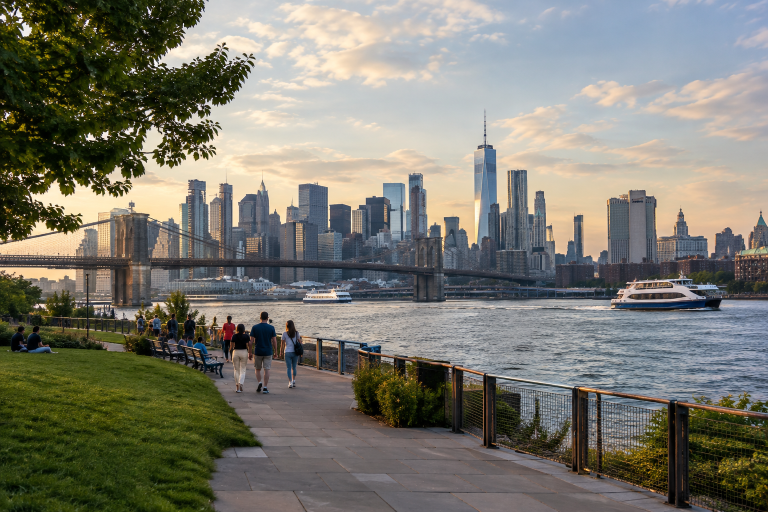
Start by deciding what kind of skyline experience matters most. A high observation deck works for a broad panorama and an easy sense of the city’s scale. A waterfront path brings bridges, ferries, and changing reflections into the picture. Parks offer a slower pace, while a bridge walk makes the skyline feel active and close.
Choose one main viewpoint, then add no more than two nearby stops. For example, a Midtown plan might center on an elevated view and continue through Bryant Park or Fifth Avenue. A Brooklyn plan could focus on the waterfront, a neighborhood stroll, and an evening view back toward Lower Manhattan. Fewer major stops usually create a fuller day.
2. Pick the Best Time for Skyline Views
Morning is often the easiest time for a calm walk, especially if your preferred viewpoint is outdoors. Afternoon can be useful for museums, lunch, and closer looks at buildings. Late afternoon gives you time to settle into a waterfront or overlook before daylight shifts, while evening brings illuminated windows, bridges, and streets.
A Simple Timing Plan
- Morning: Take a walk in a park, over a bridge, or along the waterfront while energy is high.
- Afternoon: Schedule lunch, an indoor attraction, or a seated break.
- Late afternoon: Reach the main viewpoint early enough to avoid a rushed arrival.
- Evening: Finish near dinner so the group does not need another long cross-city trip.
3. Build a Route by Neighborhood
Neighborhood-based planning saves time and makes the city feel more connected. Distances that seem short on a map can take longer because of traffic lights, crowds, large blocks, stairs, and the time needed to find the right subway entrance.
- Midtown: Combine a skyline stop with landmark streets, a public park, and dinner nearby.
- Lower Manhattan: Pair harbor views with historic streets, the Financial District, or a relaxed meal.
- West Side: Blend modern architecture, the High Line area, and Hudson River views.
- Brooklyn: Build around a neighborhood walk, waterfront park space, and the Manhattan skyline after sunset.
4. Plan Transportation With Less Stress
Use transportation as a tool, not as a challenge to be solved perfectly. Walk when the route is pleasant and short enough for the group. Take the subway when moving between distant neighborhoods, and consider a taxi or rideshare during heavy rain, late at night, or when traveling with young children and extra gear.
Reviewing subway and neighborhood maps before leaving can help you identify accessible stations, nearby lines, and alternate routes. Keep a little flexibility in the schedule because a station entrance may be farther from the attraction than expected.
5. Check Weather, Events, and Street Changes
Weather changes the experience of an outdoor view. Low clouds can hide distant buildings, wind can make waterfront areas feel much colder, and summer heat can turn a long walk into a tiring one. Bring water, sunglasses, a light layer, and compact rain protection when the forecast calls for changing conditions.
If your route includes bridges, waterfront paths, or busy Manhattan avenues, check planned street and bridge closures before you go. Construction, parades, and permitted events can affect vehicle traffic, sidewalks, and the time needed to reach a timed reservation.
6. Make the Day Comfortable for Everyone
The best itinerary works for the slowest person in the group. Plan a seated break every few hours, keep food close to the next activity, and avoid filling the day with too many ticketed attractions. Travelers with mobility needs should confirm accessibility details directly with each venue before booking.
Carry only what you will use. Comfortable shoes, a portable charger, identification, water, and weather protection are usually more valuable than a heavy day bag. Families can make the day easier by building in snack stops and choosing one major activity for each half of the day.
7. Pair Views With Local Experiences
A skyline is more memorable when it becomes part of a broader New York experience. Follow a morning view with coffee and a museum, connect a waterfront stroll to lunch in a nearby neighborhood, or end a sunset stop with dinner within walking distance. These pairings create natural pauses and reduce unnecessary travel.
8. Create a Simple Photo Plan
- Take one wide image that shows the full scene.
- Photograph a close detail, such as a railing, rooftop, sign, or facade.
- Include a person, a tree, a boat, or a street scene to show scale.
- Try both horizontal and vertical framing.
- Return to the same view if the light changes noticeably.
Clean the camera lens before starting, and spend part of the visit without a screen in front of you. The best souvenir may be the photo, but the memory is stronger when you take time to simply look.
9. Prepare a Backup Itinerary
Rain, transit delays, long lines, and fatigue can quickly change a New York City day. Keep one indoor option nearby, such as a museum, market, café, gallery, or covered shopping area. If the weather turns, adjust the order of activities rather than abandoning the entire plan.
10. Common Questions About Skyline Days
How many skyline stops should I plan?
One main viewpoint and one or two nearby outdoor stops are usually enough for a satisfying day without constant transfers and lines.
Is sunrise or sunset better for photos?
Sunrise can feel quieter and softer, while sunset offers changing colors and a livelier mood. Choose the time that best matches your energy level and the rest of the route.
What should I do on a cloudy day?
Focus on museums, interiors, food, historic streets, and close architectural details. Cloud cover can still create appealing light for photographs.
Conclusion
A memorable day in the New York City skyline does not require a packed checklist. Choose one clear view goal, stay close to a sensible neighborhood route, leave time for food and rest, and keep a flexible alternative ready. The skyline may bring you to New York, but the streets, parks, buildings, and unplanned moments are often what make the day last.